
Pelvic Floor Physiotherapy in Toronto Annex

What is pelvic floor physiotherapy?
We offer pelvic floor physiotherapy for those assigned female at birth (AFAB).
Pelvic physio is a great solution for women who are experiencing:
Pelvic pain (pain in the pelvic region)
Feelings of heaviness in the pelvic region
Tightness in the hips, pelvis, or low back
Pregnancy-related pain, tightness, and more
SI joint pain
Leaking with exercise
A feeling of urinary urgency
Frequent urination
Diastasis (a separation of the abdominal muscles)
Prolapse
…and more
Pelvic floor physiotherapy is incredibly beneficial for resolving these symptoms. You do not need to live with these symptoms or “just wait” for them to get better.
Your first appointment will include a conversation about your symptoms, goals, and medical history. Depending on your concerns, your physiotherapist may recommend an internal assessment of the pelvic floor muscles to better understand how they're functioning. This is always explained beforehand, is completely optional, and will only be performed with your informed consent.
Book your free discovery call today to talk to our team and get started with pelvic health physiotherapy.
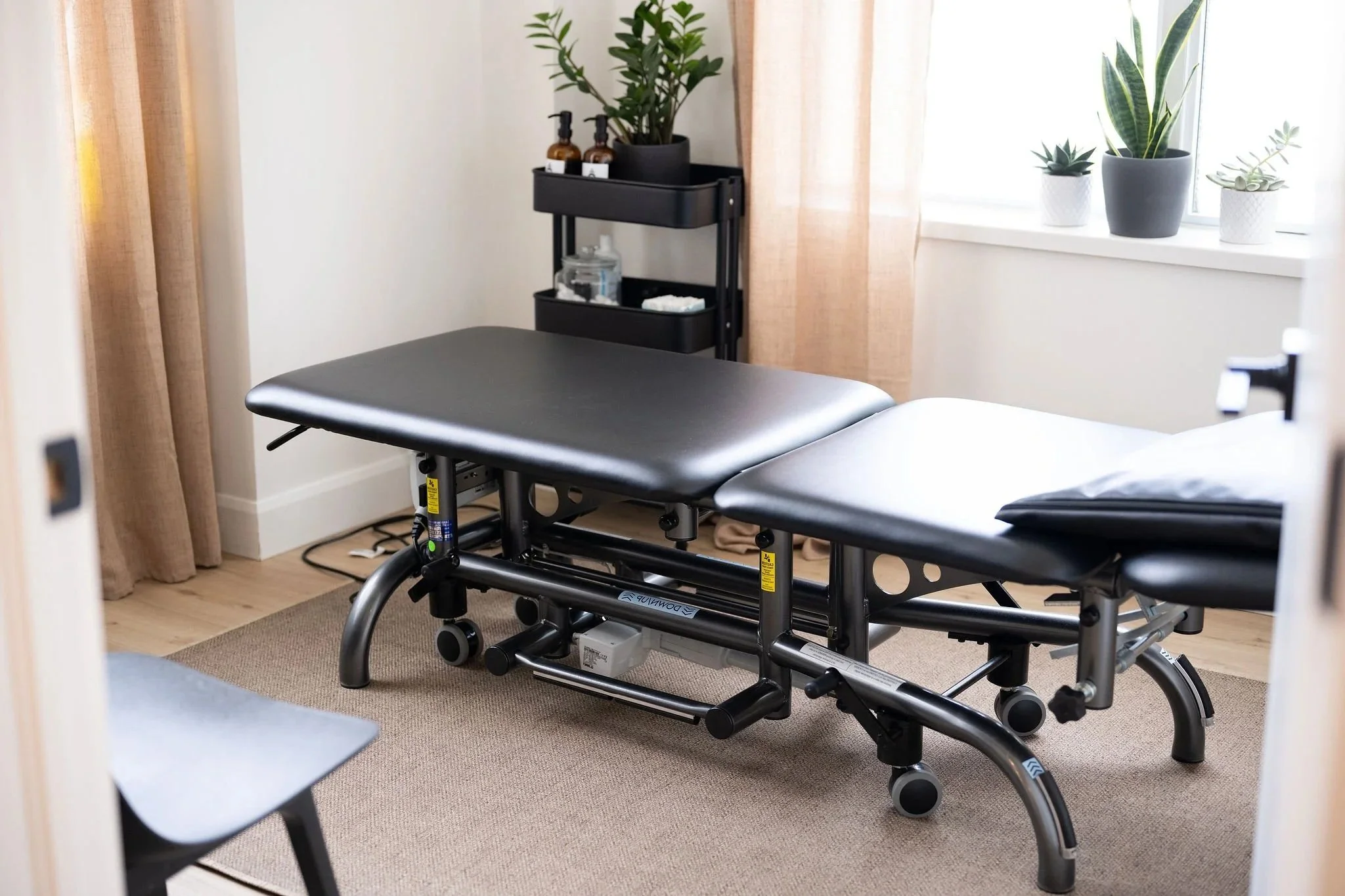
Each appointment is individualized to your needs and is one-on-one with your registered physiotherapist in a private treatment room. Your appointment can include
Discussing your specific pelvic floor symptoms/concerns
Medical and pelvic health history
Birth history and/or birth preferences if you're pregnant or postpartum
Pelvic floor and core education
Evaluate your posture and movements patterns
Optional internal pelvic floor exam
Prescribe, observe and progress exercises specific to your goals
Provide labour and birth prep including pelvic floor considerations
Provide postpartum recovery guidance back to your goals including exercise, return to running, strength training, yoga and Pilates
Put together a personalized plan for your goals
What to Expect during your Pelvic Floor Physiotherapy Appointment?
-
Every woman can benefit from working with a pelvic health physiotherapist, no matter their stage in life. Our goal is to guide you in preventing, managing, reducing and resolving common pelvic floor conditions.
Pelvic health physiotherapists are trained to assess and treat the pelvic floor. This means we assess how your pelvic floor muscles work together with the rest of your body and not just as a set of isolated muscles.
-
Yes! It can actually be helpful to assess while you're menstruating as the pelvic floor muscles and pelvic organ position can change with hormonal changes.
However, if an internal exam makes you feel uncomfortable we can always continue with only external treatment
-
No! An internal pelvic exam is not mandatory. However, it is the most effective way to assess how your pelvic floor muscles and connective tissue within the pelvis are working. An internal exam may be recommended to further investigate your symptoms.
You will always be asked to provide consent before any assessment and you are welcome to remove your consent at any time.
Prior to an internal exam, your physiotherapist will explain what is involved with an internal pelvic floor exam.
-
For an internal assessment, your physiotherapist will leave the room so you can undress from the waist down. You will lie on the treatment table (similar to a doctor's office) and drape/cover yourself with a sheet provided.
The internal portion involves your physiotherapist inserting one or two gloved fingers into the vaginal canal, or one finger is inserted into the rectum. This allows access to the front and back portions of the pelvic floor muscles as well as the multiple layers of muscle. Pelvic floor strength, tone, laxity, coordination and connective tissue are assessed this way.
Your physiotherapist will explain and ask for consent prior to each step of the assessment. You are always able to remove consent at any time